Sunday, June 17, 2018

Workforce diversity and HRM in 21st Century

 
Figure 1- Workforce diversity (Burns and Barton, 2012)
According to Loysk (1996), with globalization, as the whole world became a village, today people are no longer living and working in an insular environment. They are part of a worldwide economy competing within a global framework. According to Burns & Barton (2012) a research done in U.S workforce, companies are required to be interact among people from diverse backgrounds in order to maintain competitiveness in the global market.

According to Moorhead & Griffin (1989), workforce diversity can be defined as,


                 Figure 2 - Definition of Workforce diversity (Moorhead & Griffin, 1989)
According to SHRM (2007), research done among 5000 SHRM HR proffesionals, in order to manage diversity, HRM practisesis must adapt to accommodate a multicultural work environment. Loysk (1996) stated that, bringing all the people of different nature under a one roof of organization the key responsibility of HRM on diversity management. 
According to Bedi & Lakra (2014), in past diversity was treated as a legal issue which is only a challenge but now in 21st century accoring to Roosevelt (2001), companies realize that diversity is a reality to build a stronger, competitive enterprise rather than something deal with. 

Challenges of workforce diversity on HRM in 21st Century 

According to Morais, Pena, Shacket, Sintilus, & Ruiz (2014), research done on Starbucks, as an international company, HR is responsible on recruiting qualified candidates while promoting diversity by recruiting employees from all genders, races, religions, nationalities and etc. where two roles appear to be at cross purposes to each other, which is a great challenge for HRM in today. 
According to Patrick & Kumar (2012), a research done on IT sector of India, training employees to be sensitive and accept to cross-cultural differences and offering foreign language trainings to increase inclusiveness, is a challenge for HRM as it pushes HRM more for a cost center inside the company. 
Especially in Multinational companies practicing mindful of ‘Think Global, Act Local’ approach in order to motivate highly qualified culturally diverse professional and assure foreign professionals are not a threat for career advancement of local professionals is a great challenge of HRM. At last according to SHRM (2007), author would suggest for HRM to practice culturally relative perspective (Let's take the best variety of ways) rather than ethnocentric view (our way is the best) in the business context to manage diversity in an effective manner.

References 

Bedi. P. and Lakra. P. (2014). Workforce Diversity Management. IOSR Journal of Business and Management (IOSR-JBM) , 102-107.
Burns. C. and Barton. K. (2012). The State of Diversity in Today’s Workforce. Center for American Progress, 4-10.
Loysk. B. (1996). Managing a changing workforce: Achieving outstanding service with today’s employees. Davie: Workplace Trends Publishing.
Moorhead. G. and Griffin. R. (1989). Organizational Behavior. Indiana: Houghton Mifflin Company.
Morais. U., Pena. J., Shacket. K., Sintilus. L. and Ruiz. R. (2014). Managing Diverse Employees at Starbucks: Focusing on Ethics and Inclusion. International Journal of Learning & Development , 35-40.
Patrick. H. A. and Kumar.V. R. (2012). Managing Workplace Diversity: Issues and Challenges. SAGE Open , 1-15.
Roosevelt, T. (2001). Elements of a successful “diversity” process.  The American Institute for Managing Diversity: Accessed by: https://www.coursehero.com/file/p5u15p6/Roosevelt-T-R-Jr-2001-Elements-of-a-Successful-diversity-process-The-American/ Accessed on  28th May  2018, 10.29pm. 
SHRM. (2007). State of Workplace Diversity Management. Society for Human Resource Management , 14-19.


Sunday, May 20, 2018

HRM in the Digital Age


The world has changed in cultural, societal and economical sectors due to digital technological changes. Those changes play a role in employees’ lives and HRM. According to Ashbaugh and Miranda (2002), in this digital age, HRM has transferred as E- HRM, as companies have to be adopted for the digital technological changes in recruit to retire functions, to be success. Evolution of HRM in according to technology changes is given below.

        Figure 1- Evolution of HRM according to technological changes. (Ashbaugh and Miranda, 2002)
Table 1- Evolution of HRM according to technological changes

Stage
Functions
Example
Paper-Based Systems/Legacy mainframe systems
  • HR was the sole custodian of the data.
  • Reporting was very rudimentary
In earlier time HR manager send employees to HR department to get their all their needed personnel information noted down by a HR officer.
Personal Computer (PC) Technology and local area network (LAN) systems
  • HR data were stored on a client server which is HR network.
  • Able to produce reports that simply listed employee information.
In Hemas Ltd. earlier time all the information on HRM practices are entered in to a PC and stored there.
Electronic Database Systems
  • Emergence of relational database that stored a piece of data in more than one file, with different types of data.
  • Develop more complex reports that integrated several data elements.
  • Enterprise-wide system was initiated (SAP) which interrelate HR functions with all other departments.
  • E-HRM has begun.
Singer HR department was able to generate employee report could from different databases that included name, address, and salary and benefit information.
Web-Based Technology
  • Interactive voice response (IVR)
To interact with databases to get information or enter data into it a touch-tone phone is used.
  •  Web-based applications
Applications that use a Web browser as a user interface
Omega Line Ltd. HR department used to get basic information needed from candidates for the recruitment process via website information forms.


(Author developed based on Ashbaugh and Miranda, 2002)

If considered 21st century, most of the HRM functions are linked with this digital technology.
Table 2- Electronic technological tools used in HRM functions in 21st Century 

Function
Technology Tools
Process/ ac
Employee recruitment, selection and placement.
  • E-recruitment web portals
  • Social Media Sites (Facebook, LinkedIn)
Post available job positions and qualifications in web portals and job seekers select their expertise and apply.
Employee Development
  • E-learning
  • Career Development Online Appraisal System (e-performance)
Employees are able to increase their skills through e-learning as they are provided with necessary inputs for career growth and feedback on their performance via E-learning.  
Compensation
  • E-compensation,
  • Compensation settlements Flexi-reward Packages Facilities
Determine the cost to company for the compensation plan awarded to employee and employee can determine the pay he will get in hand via e-compensation system they have lounged.
Employee Relations, Communication and Work Environment
  • Intranet
  • OD and Team Development
OD exercises help in bringing organizational change and effective team development and build better employer employee relations.
Decision Making
  • Decision Support System (DSS) 
  • Artificial Intelligence (AI) System
  • Online Analytical Process (OLAP)
  • Group Decision Support System(GDSS)
DSS Technology tool used to get HR decision enable for taking quick business decisions as it summarize large amount of data with speed to a useful result.  
Human Resource Information System (HRIS)
  • Intranet availability of Data record of  Employees

All the information on company portals, employee portals, company policies, employee feedback etc. of Google.com is available in company intranet.
(Author developed based on Beer, 1997)

Challenges of E-HRM on organizations

It can be analyzed that with the concept of E-HRM, all the HRM data are mainly stored and handles via technological systems. According to a research done in China on E-HRM by Shrivatsava and Shaw (2003), it is a challenge for HRM, with the advance of technology, security of the data privacy also has to be advanced. HRM will have to lounge security systems, prevent privacy breaches and provide trainings for employees on data securing, which will cost high and time consumable and it will directly impact on company profits.  
According to a web based survey 136 US and Canadian on E-HRM by Tansley and Watson (2000) stated that with rapid technological changes in according to remain competitive advantage, companies will have to adopt for the technological changes. Therefore companies will have to lounge new digital systems with the trend. It is required to provide trainings for employees which will be a cost for the company that have to be bared anyhow. 

According to Ulrich (1997) a research done on  Motorola in Russia he has stated that, changes in technology can result in anxiety and resistance among employees. Most of the roles of employees are replaced by a machine or computer which is cheaper and fast, but this enables lack of trust on employees towards the company and de-motivated.  It is a challenge for HRM for assure employees of their worth and meaningful place within the business and by help to see the technology as an aid not a hindrance to their work. 
Figure 2 - Technology and Employees (Beer, 1997)
According to above saying it can be analyzed that due to this technological development employees will even tent to be like machineries. Innovative and Creative ideas might not pop up and it is a great challenge for HRM to pop up and develop creativeness from the employees. 
  
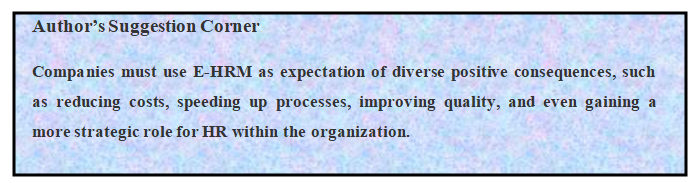
Figure 3- Author's suggestion corner (Author developed) 

References

Ashbaugh. S. and Miranda. R. (2002), “Technology for Human Resource Management: Seven questions and answers”, Public Personnel Management, Sage Publication, 31(1).
Beer. M. (1997), “The transformation of the human resource function: Resolving the tension between a traditional administrative and a new strategic role”, Human Resource Management, 36(1).
Fernandes. A. (2017). The Digital Age of Real Estate. Deja Vu Real Estate Broker, 4-9.
Shrivatsava. S. and Shaw. J. B. (2003), “Liberating HR through technology”, Human Resource Management, John Wiley & Sons Ltd. 42 (3).

Tansley. C. and Watson. T. (2000), “Strategic exchange in the development of human resource information systems (HRIS)”, New Technology, Work and Employment, 15 (2).

Ulrich. D. (1997). Human Resource Champions: The Next Agenda for Adding Value and delivery Results. Harvard Business School Press, Boston.  


Sunday, May 6, 2018

Gap between Talent Demand and Supply

Figure 1- Globalization and HRM (Mikecz, 2016)
With the globalization, due to rapid changes within businesses context, modern businesses’ HRM departments face numerous and complex challenges, and exploit opportunities and the role of HRM is transforming. According to Prahalad (1983), an organization’s talent is the main source which decides company’s competitive advantage, profitability, sustainability and employee performance.

According to a research done by Ulrich (1996) among 180 multinational company chief executives around the word stated, global supply of talent is shortage and the gap between the demand and supply of talent is a challenge for HRM and it is about to be increase continually. For an example, World Economic Forum (2010) stated, United States faces long term talent shortages mainly due to aging and retirement of baby boomers. By 2020, for every five retiring workers, only four new workers will join the labor force.

According to a research done on largest sixteen US companies by Hamel and Prahalad (1994), companies must practice strategies for attracting human capital rather than financial capital. Multinational enterprises that will adapt their HR practices in according to changing global labor market conditions and foresee labor demand trends will be able to attract and retain high performing employees.

As the world has become a one village with globalization, it is a challenge for HRM departments of multinational companies to manage a workforce diverse in culture, language skills, and distributed in various countries. HRM departments will have to develop a global mindset among employees rather than limiting to local ways of doing business.

According a research done by Rosenblatt (2011) on multinational companies, there is an incensement of low cost labors from emerging countries and the number of migrants grows exponentially from developing countries to developed countries. According to Prahalad (1994) a research done among Indian, Chinese and United states universities, India produces engineers twice as United states and China do. Which can be analyzed that the total number of university-educated workers in developing countries (low cost labours) is greater than in developed countries. 
It would be benefit for developed countries as it minimizes talent gap for cheap-able cost. But for developing countries, HRM will have to practice strategies to retain employees and attract worldwide talent employees via playing roles and responsibilities in organization which openness to cultural diversity.

References 
Hamel, G. and Prahalad, C.K. (1994), Competing for the Future. Boston Mass: Harvard Business School Press.  

Mikecz, R. (2016, October 23rd). Globalization: Threat or Opportunity?. Available at: http://glomacs.ae/articles/globalization-threat-opportunity. Accesses on 06th May 2018 at 06.33pm. 
Prahalad, C.K. (1983). Developing Strategic Capability: An Agenda for Top Management, Human Resource Management, 22: 237-54.   
Rosenblatt.V (2011). The impact of institutional processes, social networks, and culture on diffusion of global work values in multinational organizations', Cross Cultural Management: An International Journal, Vol. 18 Issue: 1, pp.105-121. 
Ulrich. D (1996) .Human Resource Champions-The next agenda for adding value and delivering results. Boston, Mass: Harvard Business School Press.

Sunday, April 22, 2018

Welcome HRM as a Productivity Center in 21st Century


Figure 1 - 21st Century (Leonard, 2018)

According to Cindy (2007), in the past HRM department was considered as a cost center as it only costs money for the organization and do not brings any revenue or profit. HRM departments has tracked job applicants, maintained employee paperwork and filled annual performance evaluations. At that time line managers were responsible on managing employees directly.

But in 21st century according to Bloom & Reenen (2010), a survey done on Fortune 1000 companies between 1987 to 2002, HRM department is considered as a productivity center as it enhances profitability via enhancing productivity of the employees. According to Burke & Esen (2005),  productivity is amount of output can be get from a one unit of input. With human usually it consider unit of time. Cindy (2007) stated that productivity can be achieved by having effectiveness and efficiency.


                    Figure 2 - Definitions of Effectiveness and Efficiency (Cindy, 2007)

Since both of them are important, most of the companies focus on achieving high efficiency, in order to earn profits.

Challenges for HRM on getting high efficiency from employees


According to Assesshub (2018) as Chairman Emeritus, Infosys Ltd. Mr. N.R Narayana Murthy quoted, with the changing complex business environment; tighter labor markets, economic uncertainty and globalization, to protect the respect and dignity among employees in order to get high quality minds to work for the company, is challengeable.
Sometimes HRM department might get unsatisfactory results on employee performances. This is a challenge for HRM, as main goal of any company is to earn good profit, this costs time and money in order to retune it. According a study done Cindy (2007) on her Human Resource Certification Institute, HRM should analyze situations and identified the cause whether inefficient employee or inadequate resources.
Table 1- HRM Department practices need to be followed when employees are not efficient enough
Cause
HRM department practice
Inefficient employee
  • On-site and off-site job trainings
  • Recruit new staff
Inadequate resources
  • Find alternative resources for sufficient input.
        (Author developed based on Cindy, 2007)
Employees who developed professionalism and knowledge through experience have a good demand in job market and at any point there is a possibility of resigning which will be a cost for the company in terms of training and recruitment cost. This a great challenge for HRM to retain employees for a long time period. Employee development and engagement, health and safety, recognition, flexible work timings, work-life balance are some novel approaches to retain employees. 


References 

Assesshub. (2018). 9 challenges of human resource management and how to manage them. Retrieved May 7th 2018: 7.15am, from Assesshub: https://www.assesshub.com/blog/9-challenges-of-human-resource-management-and-how-to-manage-them.

Bloom, N., & Reenen, J. V. (2010). Human Resource Management and Productivity. Cambridge: Working Paper, (19), pp.160. 

Burke, M. E., & Esen, E. (2005). Workplace Productivity. United States of America: SHRM Research Department .

Cindy, W. (2007). 21st-Century Human Resource Management Strategic Planning and Legal Issues. London: Press.

Leonard, J. (2018). 21st Century Manufacturing: A World of Difference. The U.S. Chamber of Commerce Foundation , pp. 1-6.


Monday, April 9, 2018

Introduction for Human Resource Management


(Franklin University, 2018)
Organizational resources can be identified as anything that could be thought as a strength or weakness of a given firm including tangible and intangible assets. There are four main organizational resources. Such as, land, capital, labor and entrepreneurship. Any organizations' success depends on how it manages its resources. Human Resource Management (HRM) is that part of management which concerned with people and their relationships in the organization. There are many definitions for HRM developed by many authors. 

Definition 

“HRM is a strategic approach to managing employment relations which emphasizes that leveraging people’s capabilities is critical to achieving competitive advantage, this being achieved through a distinctive set of integrated employment policies, programmes and practices” (Bratton & Gold, 2007). Armstrong (2014) stated that, HRM is defined as a strategic and coherent approach, which is the most valued assets of company and employees individually and collectively contributes to the achievement of its objectives in the business context. “HRM is a managerial perspective which argues the need to establish an integrated series of personnel policies to support organizational strategy” (Buchanan & Huczynski, 2004). 
By considering all the definitions, according to the author’s perspective, HRM is managing organization’s manpower effectively in order to achieve company goals and build relationship based on trust, openness and personal fulfillment.  

Tracing the roots of HRM  

Rotich (2015) said, if consider two centuries back, HRM which was defined as “labor welfare” or “personnel” was associated to keep employee records, ensure of following company rules, determent wages and compensations. According to  Armstrong (2014), in 19th century at industrial revolution, with the labor office, HRM has been came along way till Artificial Intelligence in 21st century. Evolution of HRM is figured in below with the time ranges.  
Figure 1- Evolution of HRM Timeline (Khanduja, 2016)
If consider today, with the digital world and changes in the business environment, the advent of analytics, big data, robotics, automation machine learning has been highly influential regarding HR transformation. Experts in HRM say that HR transformation has still a long way to go with the technology changes.  

Reference

Armstrong. M. (2014). Armstrong’s Handbook of Human Resource Management Practice. London, Koganpage.

Bratton. J & Gold. J. (2017). Human Resource Management: Theory and Practice, 6th ed. Basingstoke, Palgrave McMillan.

Buchanan. D, & Huczynski, A. (2013). Organizational Behaviour: An Introductory Text,8th ed. Harlow, Pearson Education Limited.

Franklin University. (2018). Master’s in Human Resource Management: Should I Do It? Going back to school , 1-2.

Khanduja, M. (2016). Evolution of Human Resourse Management . E- Handbook , 3-9.

Rotich, K. J. (2015). History,evolution and development of Human resourse management: A contemparary perspective. Global Journal of Human Resource Management , 58-73.


Learning and Development and HRM

Figure 1- Learning and Development (Kirkwood, 2017) In today Human resource is considered as the main resource that decide succe...